The Diner I Never Worked At And Other Unsuccessful Stories
When I was seven, I declared to my parents that I wanted to work in a diner. They were properly horrified. To hear this from their daughter who was well ahead of her age in school, loved math, read poetry, and did gymnastics! They had a better future in mind. Better according to their standards, of course, which had their logic.
Now you have to understand that as a child of the dying end of the Soviet era, the idea of having sufficient food available to you every day did hold its attraction. Compared to half-empty, echoing shelves in the grocery stores, a diner with its always available salami sandwiches and exotic things like oranges all year round seemed quite heavenly to seven-year-old me. I loved the idea of cooking delicious meals for people and then being able to also bring home some of that culinary abundance. My dream was quickly extinguished when my mom explained that even though taking food home was a way of life in a country permanently crushed by the deficit of everything, it was still, in its essence, stealing. I was shocked and heartbroken.
But even if I had decided to bravely stay away from food theft, such a career choice would not have been approved. Both of my parents were engineers — the first in their families to achieve this level of education — and so the same or better was envisioned for me. A diner cook would have been a sad turn of events for them, even though at the time a diner cook was often much better off financially than most engineers. Such were Soviet realities. So what really would have been more successful? And who determines what success is?
My idea of success was a hand-me-down quilt of hopes and fears owned by my parents, my peers, books, movies. It existed unseen, yet ever-present. I never questioned it. I didn’t think I could. Who questions that the flower follows the sun and the water flows downstream? I continued on as an A student, went to a highly specialized school, and then to university for a math degree. No diners in sight. And I would likely have continued dutifully into a career involving computers and incremental company growth.
But that path was interrupted when I moved to a different country, spent several years in immigrant survival mode, and then immediately entered a season of parenting. When I emerged from it, the path to success I had been carrying no longer worked. The invisible moving force turned into something cumbersome and uncomfortable to carry around. Shouldn’t success make you feel good? Inspired? What do you do if instead it makes you feel anxious and somehow not right?
And yet again — who determines what success is? To some people I had achieved a lot already. I moved to the United States. I was married. I had children. My husband was a good man. To others I had wasted my potential. A bright student who had done well in a difficult university had turned into a housewife, with no career and little prospect of having one. To me, I was simply lost. I was no longer happy being only a parent, yet I did not consider my role as a wife and mother something to be discarded as a non-achievement. But let’s leave the topic of invisible labor for another day.
There I was — neither successful nor failed — with no understanding of where to go from there. As I began questioning the idea of success, I started noticing how often it existed disconnected from actual humans. Again and again I saw people who were clearly successful by conventional standards feeling uneasy in their roles. That uneasiness made them feel even more lost, because on the surface everything looked right. Yet inside, something didn’t quite fit. And to add to the confusion, listening to that feeling seemed completely out of the question, and understandably so: having spent years dedicated to a certain goal, who would willingly consider shredding it all because of a shapeless feeling?
At the same time, I also met people who followed paths outside conventional success ideas, and yet they seemed fulfilled and aligned. They seemed to be — well, happy. It was fascinating, but there was no big realization for me then, instead mostly more confusion. I felt little support for my desire to look for my own path, yet I could not bring myself to follow the “normal” route either. That was what I kept hearing: find a normal job, get a normal degree. But I didn’t believe in normal anymore, and so I kept searching without any certainty that what I was doing would bring me anywhere near success — whatever success actually was.
I tried different things, sometimes inspired but often unsure how they could become my path forward. I did what others were doing, what had clearly worked for them, and yet somehow it did nothing for me. Where others succeeded, I continued to fail in my efforts. And failing consistently without much support is an exhausting business. I do not recommend it. Still, doing nothing terrified me even more.
Somewhere along the way, a friend mentioned Human Design. At the time I knew nothing about it, but she offered to do a reading and I was curious enough to agree. To be honest, I don’t remember much of what was said. I was entertained, but not impressed. The one thing that stayed with me was when she told me that I might simply move through life differently than most people — and that what works clearly for many others might not work for me. That resonated. She did not know about my struggles, yet somehow she named the pattern I had been living with.
The idea that there might not be something wrong with me — simply something different — was a relief. But it didn’t immediately solve anything. If I wasn’t meant to do what everyone else was doing, then what exactly was I supposed to do? So I continued trying and failing.
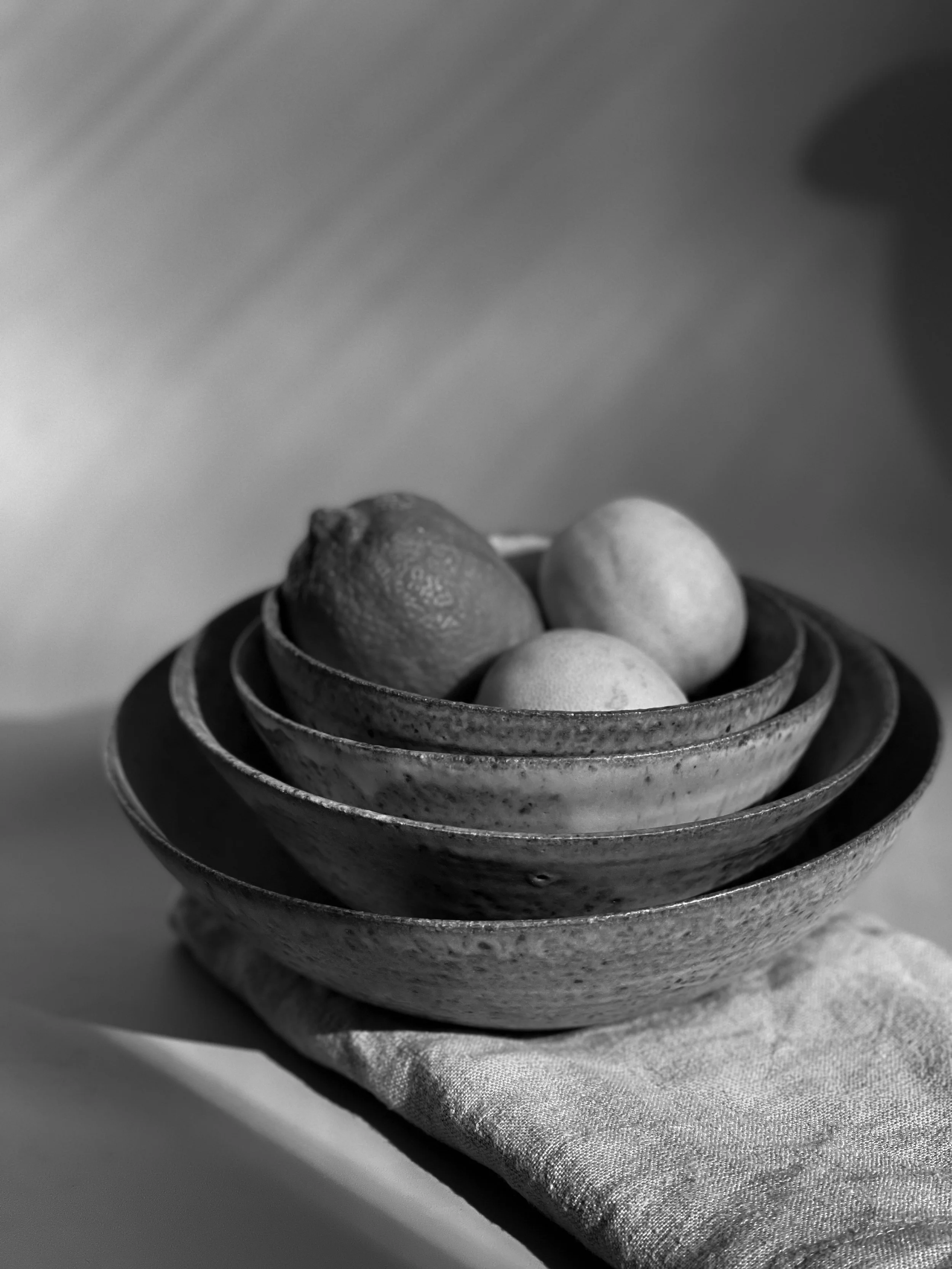
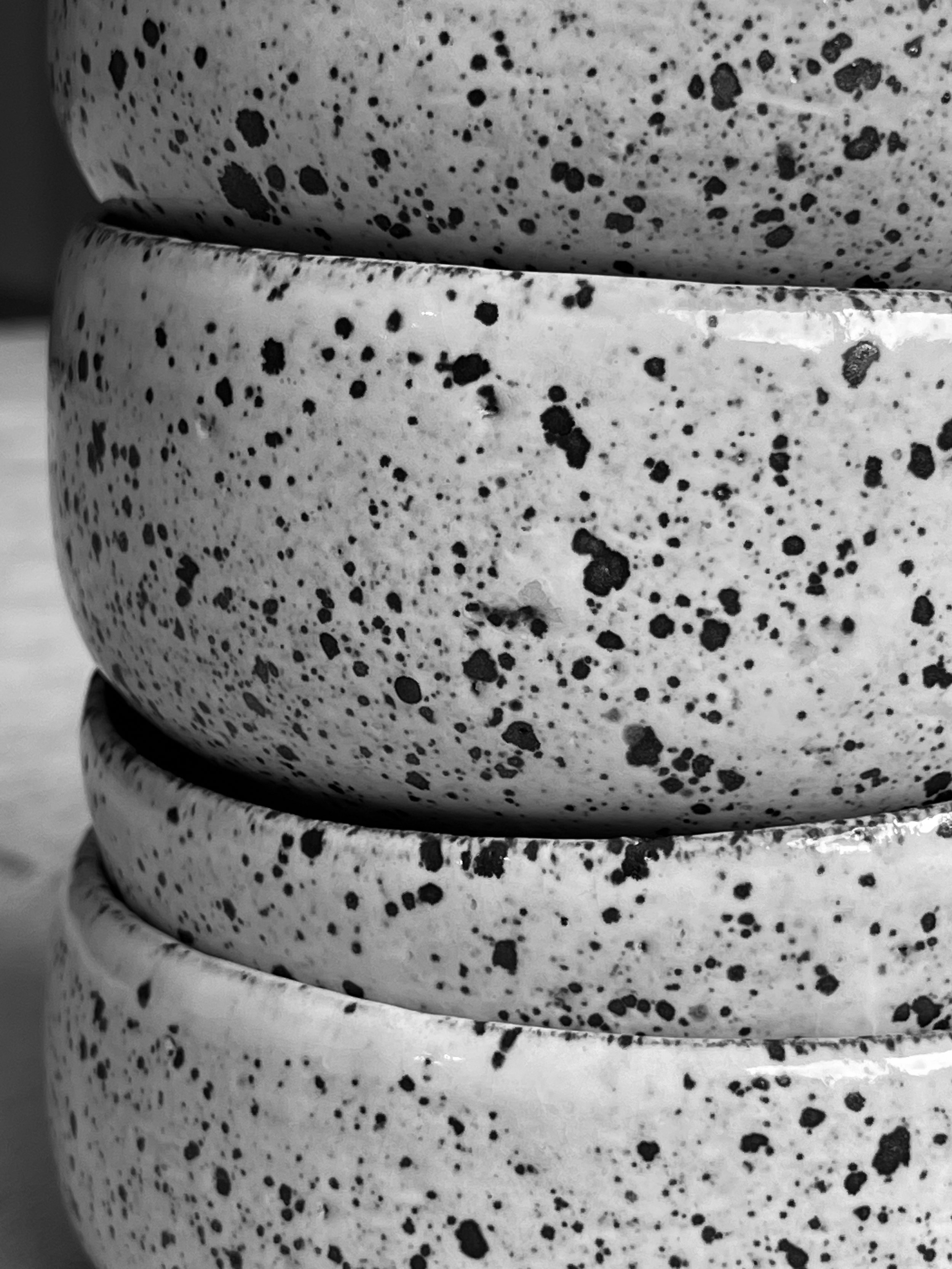
Not all of it was a loss. I discovered ceramics and eventually found my place in it. Later I encountered narrative coaching, which for me became the first space that truly embraced a person together with their story instead of pushing everyone toward universal ideas of what a good life should look like. And then Human Design quietly returned to my life. Again. And again.
I resisted it with everything I had been brought up to value: math, logic, reliability, scientific method. They all hissed at the idea of something so intangible, so out there, so completely without clear proof. Until I met a way of working with this system which was totally different from what I encountered before. It was less about abstract ideas and energies and more about alignment through clear steps. This is where I realized that the proof my logical part was craving was not in how Human Design came to be, but in what it did for people. I watched them receive permission — sometimes for the first time — to align their lives with what genuinely felt right to them. The knowledge removed expectations and conventional ideas of what is “right” in a surprisingly gentle way. Combined with narrative coaching, it led me to a different kind of question: not what success should be, but what it means for this particular person, at this particular moment.
And gradually, my own definition of success began to change. Instead of a fixed point — a goal, a destination — it became something more fluid. Less about what you reach, and more about how you move through life. When success becomes a way of being rather than a specific outcome, it can take endless forms. It can change with time. It can adapt as you do.
And something interesting happens: that uneasy feeling people experience when everything looks good on paper stops being so threatening, it is simply a voice asking for more alignment, not a wrecking ball. You don’t necessarily need radical life changes (although sometimes those happen too): often it is the small steps when they are fully aligned with your inner truth that begin to reshape everything. I have seen this again and again with my clients. The way you ask questions, how you structure your time, how you respond to invitations - they become the small shifts that quietly accumulate into something much larger.
Now, to bring this full circle. I never actually worked at a diner (although I did consider culinary school at one point). But I do enjoy feeding people - that never went away. I am still fascinated by food to the extent that I can plan an entire trip around the places I want to eat.
I also never worked as an “applied mathematician” — whatever that means according to my diploma. And I still enjoy math, although it has absolutely no influence on my trip routes.
But perhaps the two do come together in the way I now think about life and success. After all, what is success if not something that makes a person feel good — much like a good meal does? And just like food, it can come in many forms, many recipes. With enough curiosity, care, and a little math, one can create a recipe for something that feels just right.
Ah, my math finally applied, just as my diploma promised.
